Home expression is appropriate only for recurring, noninfected impaction, and only after your veterinarian shows you the technique. Vets favor the internal (digital) method because it empties the sacs more completely and lets you feel for problems the external method misses. If you ever see blood, pus, a lump, or your dog is in serious pain, stop and call your vet instead of continuing at home.
TL;DR:
- Home expression should only be performed for noninfected impaction after veterinary instruction, with the internal method preferred for thoroughness and safety.
- Signs of needing gland expression include scooting, licking, and a fishy smell, while swelling, blood, pus, or pain indicate more serious issues requiring veterinary care.
- Proper setup involves hygiene, gloves, lubricant, and cleanup materials, with the process performed in a tiled area to prevent lingering odors and contamination.
- Squeezing too hard or incorrectly can cause tissue damage, abscesses, or recurrent problems, especially if done frequently more often than every three to four weeks.
- Severe symptoms like pus, swelling, fever, or pain warrant immediate vet visits for diagnostics, treatment, and potential surgical removal of the sacs.
Table of Contents
- Signs Your Dog’s Anal Glands Need Expressing
- What You Need Before You Start
- How to Express Dog Anal Glands Safely
- What Happens If You Get It Wrong
- When to Skip Home Care and See a Vet
- Cutting Down on Recurring Anal Gland Problems
- Why Trust This Guide
- Should You Learn This Yourself?
- Keep Your Dog Comfortable Between Vet Visits
- Sources
- FAQ
Signs Your Dog’s Anal Glands Need Expressing
Most dogs empty their anal sacs naturally every time they pass a firm stool. When that stops happening, you’ll usually notice the classic trio first: scooting across the carpet, frequent licking or biting near the base of the tail, and a sharp fishy smell that seems to come out of nowhere.
Those three symptoms point to simple fullness. A different set of signs means something more serious is brewing:
- Swelling or redness around the anus
- A visible lump near the tail base
- Pus or blood in the area or on the stool
- Straining to defecate or visible pain when sitting
Non-neoplastic anal sac disorders show up in a moderate percentage of dogs seen at primary care veterinary clinics(https://www.vet.cornell.edu/departments-centers-and-institutes/riney-canine-health-center/canine-health-information/anal-sac-diseases), so this isn’t rare. Chronic soft stool, obesity, and food allergies all raise the odds your dog will end up in that percentage, since loose stool doesn’t apply the pressure needed to empty the sacs during normal defecation.
What You Need Before You Start
Set up a hygienic, low-drama workspace before your dog is anywhere near it. You’ll want disposable latex-free gloves, a water-based lubricant, paper towels or gauze, antiseptic wipes, and something to protect your floor or table, like a plastic sheet or an old towel you don’t mind tossing.
A few extras make the job smoother:
- Warm compress materials for a dog with mild soreness
- Disposable absorbent pads for cleanup
- High-value treats and a second pair of hands for gentle restraint
Pro Tip: Do this in the bathtub or on a tiled floor. The fluid has an odor that lingers, and you’ll be glad you’re not scrubbing it out of carpet.
Cleanliness isn’t optional here. A contaminated glove or a dirty surface can introduce bacteria right where you’re trying to relieve inflammation, and a poorly restrained dog is far more likely to get hurt or bite in surprise.
How to Express Dog Anal Glands Safely
Once your vet has approved you for home care and walked you through the motion, the process follows a fairly consistent sequence. Small dogs can usually be held on your lap; larger breeds do better standing or lying on their side on a low table.
- Glove up, apply lubricant, and have your dog’s tail lifted and held gently but firmly by a second person if possible.
- For the internal method, insert a lubricated, gloved finger just inside the anus and locate the sacs at roughly the 4 and 8 o’clock positions.
- Apply gentle, steady pressure between your finger and thumb, milking upward and toward the ducts rather than squeezing hard.
- Collect the fluid on gauze or paper towel and note the color and texture, since a vet may want that description later.
- Clean the area thoroughly with an antiseptic wipe and watch your dog for signs of soreness over the next day.
Veterinarians generally prefer the internal digital technique over external squeezing because it empties the sacs more thoroughly and lets you feel for thickening, pain, or masses that external pressure would miss entirely. Some groomers offer external expression from outside the anus, but that method carries more risk of incomplete emptying and tissue irritation, which is why most vets steer owners toward learning the internal approach instead.
Normal fluid is thin and tan to light brown. If what comes out is thick, pasty, discolored, or laced with dark flecks, that’s often a sign of infection and worth bringing to your vet’s attention rather than treating at home. Stop immediately if you see blood, if your dog yelps in pain, or if nothing comes out despite gentle, repeated attempts.
| Situation | What it usually means | What to do |
|---|---|---|
| Thin tan fluid, no resistance | Normal, healthy expression | Clean up and monitor |
| Thick paste or dark flecks | Possible infection | Contact your vet |
| No output at all | Impaction or duct blockage | Stop and call your vet |
| Blood or visible pain | Injury or infection | See a vet same day |
What Happens If You Get It Wrong
Squeezing too hard or in the wrong direction can bruise the tissue and inflame the ducts, which sets up a cycle where the glands get harder to empty next time, not easier. That local injury is the most common reason a well-meaning owner ends up making things worse.
Left untreated, ongoing impaction can progress to anal sacculitis, then to a full abscess that requires antibiotics or surgical drainage. The Merck Veterinary Manual lists impaction, inflammation, abscessation, and neoplasia as the full spectrum of anal sac disease, and each stage gets harder to treat than the last.
- Bruised or inflamed ducts from overly aggressive technique
- Abscess formation requiring drainage and antibiotics
- Chronic recurrence signaling an unaddressed underlying cause
If your dog needs expression every week or two, that pattern itself is a red flag. Manual expression typically only relieves symptoms for three to four weeks, so anything faster than that suggests a deeper problem your vet needs to diagnose, not just squeeze away.
When to Skip Home Care and See a Vet
Some signs mean the DIY kit stays in the closet. Pus, blood, fever, a swollen or hot lump, or severe pain all call for a same-day clinic visit rather than a home attempt.
- Visible abscess, swelling, or discharge
- Fever or lethargy alongside rear-end symptoms
- Recurrence within days of your last expression
- No fluid at all despite gentle pressure
Clinics can do what your bathroom can’t: microscopy or culture of the fluid, ultrasound or biopsy if something feels abnormal, and flushing under sedation for a stubborn impaction. Treatment can range from a simple expression and antibiotic ointment to surgical removal of the sacs in dogs with severe, repeated disease.
Cutting Down on Recurring Anal Gland Problems
Firm, well-formed stool is the best natural gland emptier you have, which is why fiber and weight management do more long-term work than any amount of manual squeezing. Plain canned pumpkin, a veterinary fiber supplement, or psyllium husk added gradually to meals can bulk up loose stool enough to restore normal pressure during defecation.
- Add fiber gradually and watch for stool changes over a week or two
- Keep your dog at a lean, healthy weight
- Treat chronic soft stool with probiotics or an allergy workup if needed
- Ask your vet about scheduled professional expression or surgical consultation for dogs with frequent recurrence
Pro Tip: Track your dog’s stool consistency for two weeks before assuming diet is the fix. A single loose stool from a diet change isn’t the same as a chronic pattern that needs correcting.
Why Trust This Guide
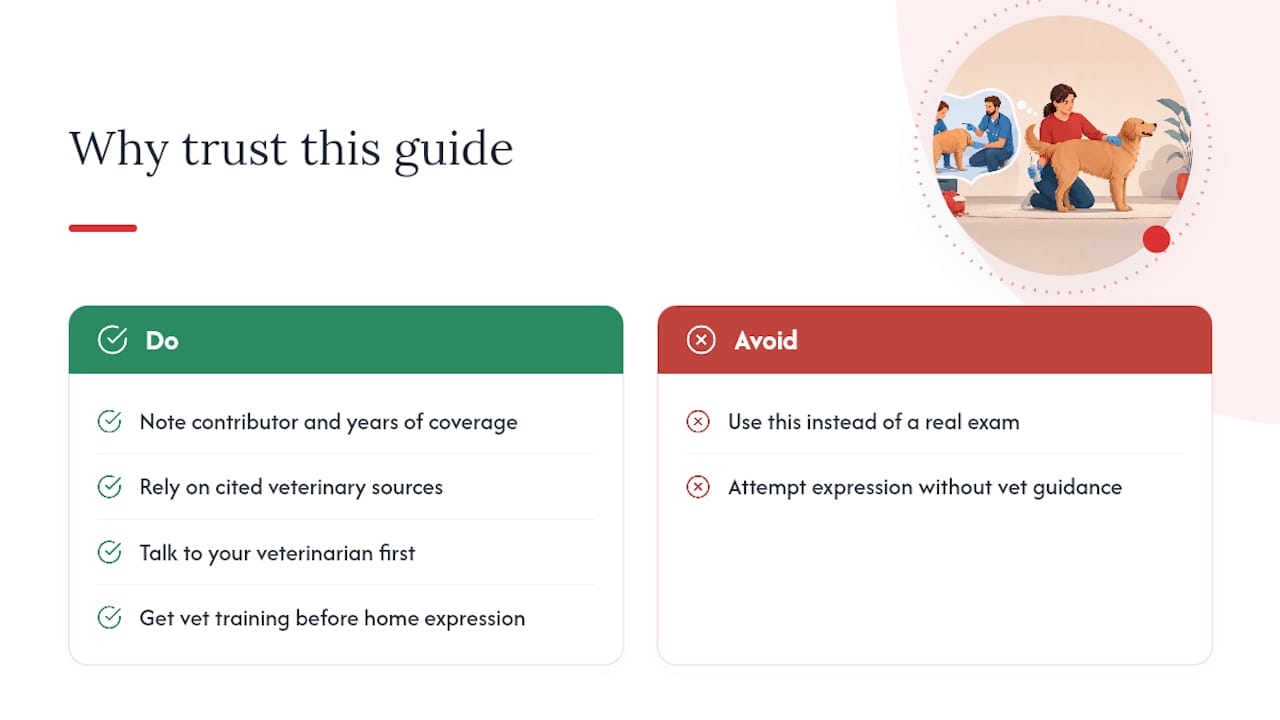
Dogs, Dames and Dudes has spent years covering hands-on dog care, from bathing techniques to everyday health questions real owners actually ask. This guide was compiled by contributor Brian, drawing on veterinary sources cited throughout. None of this replaces a real exam. Talk to your veterinarian before attempting home expression on your own dog.
Should You Learn This Yourself?
If your vet is willing to train you and your dog tolerates handling, learning the technique saves you a trip for a five-minute problem. But if the smell turns your stomach or your dog fights restraint, there’s no shame in leaving it to the clinic. That’s what they’re there for.
— Brian
Keep Your Dog Comfortable Between Vet Visits
This resource is designed for exactly this kind of hands-on question, the stuff that falls between your last vet visit and your next one. Once you’ve got the anal glands handled, the same mindset applies to everyday grooming: keeping your dog clean, comfortable, and free of the odors and irritations that send owners searching for answers at midnight.
If you’re dealing with lingering smells after an expression, our guide to mastering puppy baths covers the cleanup techniques that actually work on textured coats and sensitive skin. Handling a squirmy or anxious dog during any home procedure gets easier with the restraint tips in our quarantine advice from trainer Tamar Geller, and if you’re tempted to reach for a scented spray afterward, check our essential oils safety guide first, since not every fragrance is safe near a dog’s sensitive skin. Browse the site for more practical guides like these, written for owners who want real answers, not fluff.
Sources
- How to express dog anal glands | AKC
- Anal sac disease in dogs and cats | Merck Veterinary Manual
- Non-neoplastic anal sac disease: how to help patients who scoot, lick, leak or smell | MSPCA
Always check with your own veterinarian for guidance specific to your dog.
FAQ
How Do You Know If Your Dog Needs Glands Expressed?
Watch for scooting, frequent licking near the tail base, and a fishy odor, which together are the most common signs of full anal glands. Swelling, blood, or a visible lump means you need a vet, not home expression.
Can I Express My Dog’s Glands Myself?
Yes, but only after your veterinarian has approved it for your dog’s specific situation and shown you the internal technique in person. Vets prefer the internal digital method because it empties the sacs more fully and lets you feel for abnormalities as you go.
What Can I Give My Dog to Express His Glands?
Nothing you give your dog will directly trigger expression, but dietary fiber, such as plain canned pumpkin or a veterinary fiber supplement, firms up stool so the sacs empty more naturally during defecation. Weight management and treating chronic loose stool also reduce how often manual expression is needed.
Do Dogs Feel Relief When Their Glands Are Expressed?
Most dogs seem noticeably more comfortable right after expression, with less scooting and licking in the following days. That relief typically lasts about three to four weeks, and needing it more often than that points to an underlying issue your vet should investigate.